Discover Dubai’s highest rental yield areas in 2026. Compare ROI, short-term vs long-term rentals, and find the best property investment opportunities for maximum returns.
Dubai Real Estate Rental Yields in 2026: Where Investors Are Making the Highest Returns
Dubai’s property market has matured into one of the world’s most transparent and investor-friendly real estate environments. With no annual property tax, strong rental demand, and a growing expatriate population, investors continue to look at Dubai for consistent rental income.
But in 2026, one key question matters more than ever:
Where are the highest rental yields in Dubai?
This guide provides a realistic, fact-based overview of rental performance across key districts — designed to help investors make informed decisions.
Understanding Rental Yield in Dubai
Rental yield measures the annual rental income generated by a property compared to its purchase price.
Formula:
(Annual Rent ÷ Property Price) × 100
For example:
- Property price: AED 1,000,000
- Annual rent: AED 70,000
- Gross yield: 7%
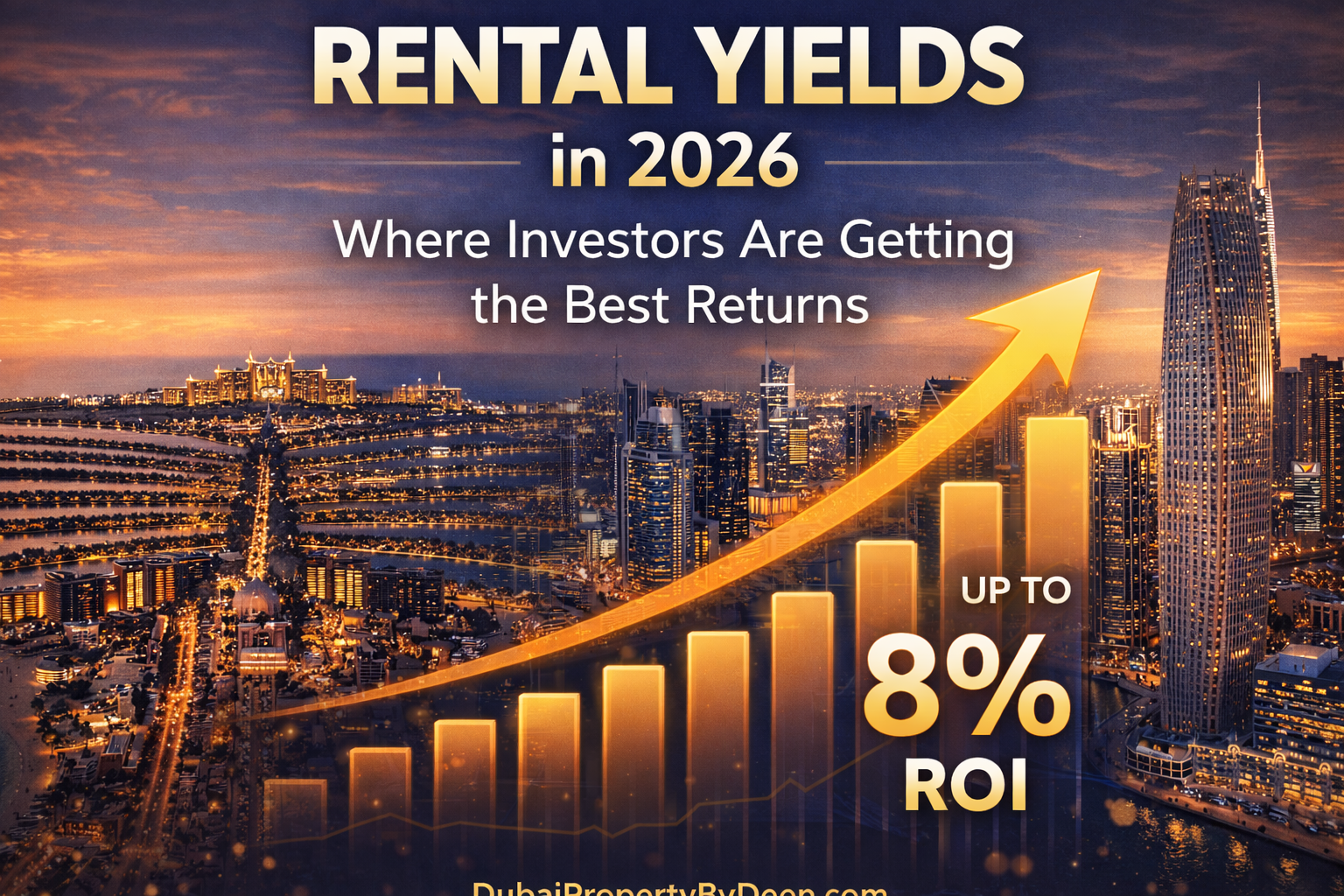
In Dubai, gross yields typically range between 4% and 8%, depending on location, property type, and market conditions.
Why Dubai Rental Yields Remain Attractive
Compared to major global cities:
- London prime areas: often 2%–4%
- New York prime Manhattan: around 3%–5%
- Singapore central districts: approx. 2%–4%
Dubai continues to offer comparatively higher gross rental returns in many mid-market communities.
Key reasons include:
✔ No annual property tax
✔ Strong population growth
✔ High tenant demand
✔ Tourism-driven short-term rental market
✔ Government investor visa programs
Top Areas With Strong Rental Yields in 2026
Below are some of the districts investors frequently consider.
1. Jumeirah Village Circle (JVC)
JVC remains one of Dubai’s most transaction-active communities.
Why Investors Like JVC:
- Affordable entry prices
- High rental demand from families and professionals
- Wide range of apartments and townhouses
Typical gross yields:
6%–8% (depending on unit type)
JVC is often considered one of Dubai’s strongest yield-performing communities in the mid-market segment.
2. Business Bay
Located near Downtown Dubai, Business Bay offers a mix of residential and commercial towers.
Strengths:
- Central location
- High demand from working professionals
- Strong short-term rental activity
Typical gross yields:
5%–7%
Business Bay appeals to investors who want both liquidity and central positioning.
3. Dubai Marina
Dubai Marina remains one of the most liquid apartment markets.
Why It Performs:
- Waterfront lifestyle
- High occupancy rates
- Strong tourism demand
Typical gross yields:
5%–7%
Short-term rental strategies can sometimes push returns higher, but they involve higher management effort.
4. International City
International City has historically offered high yield percentages due to lower purchase prices.
Investor Profile:
- Budget-focused investors
- Yield-maximization strategy
Typical gross yields:
7%–9% (varies by building quality)
However, property selection and building condition are critical.
5. Palm Jumeirah
Luxury waterfront investment.
Typical gross yields:
4%–6%
While yield percentage may be lower than mid-market areas, absolute rental income is significantly higher.
Palm investors typically prioritize:
- Capital appreciation
- Asset prestige
- Long-term holding strategy
Short-Term vs Long-Term Rentals in 2026
Dubai allows licensed short-term rentals through regulated platforms.
Short-Term Rental Pros:
✔ Higher nightly rates
✔ Flexibility
✔ Strong tourist demand
Cons:
- Management costs
- Seasonal fluctuations
- Licensing requirements
Long-term rentals offer:
✔ Stable income
✔ Lower vacancy risk
✔ Less management effort
Your strategy should align with your time availability and risk tolerance.
Factors That Impact Rental Yield
- Entry purchase price
- Service charges
- Building quality
- Developer reputation
- Accessibility & infrastructure
- Supply levels
Always calculate net yield, not just gross yield.
Net Yield vs Gross Yield
Gross yield ignores costs.
Net yield subtracts:
- Service charges
- Maintenance
- Property management
- Vacancy allowance
Example:
Gross yield: 7%
After expenses: 5.5%–6% net
Professional investors focus on net performance.
Government Regulations & Investor Protection
Dubai’s property market is regulated by:
Dubai Land Department
The DLD oversees:
- Property registration
- Transaction transparency
- Escrow account regulation
Dubai also offers long-term residency options for qualifying property investors under investor visa frameworks.
Risks Investors Should Consider
No investment is risk-free.
Potential risks include:
- Market oversupply in some communities
- Economic slowdowns
- Global financial conditions
- Interest rate changes
Diversification across property types can reduce exposure.
Who Should Focus on High-Yield Areas?
High-yield communities suit:
✔ Income-focused investors
✔ Buyers seeking passive cash flow
✔ Investors with mid-range budgets
Luxury-focused buyers may prioritize appreciation instead.
Investment Strategy for 2026
Here is a balanced approach:
Step 1: Define Your Goal
Income or appreciation?
Step 2: Set Budget Range
Mid-market or premium?
Step 3: Calculate Real Net Yield
Include service charges.
Step 4: Evaluate Liquidity
How easy is resale?
Step 5: Consider Holding Period
Short-term flip or long-term hold?
Final Thoughts: Where Are the Best Returns?
In 2026, Dubai continues to offer competitive rental yields compared to many global markets.
Mid-market communities like:
- JVC
- Business Bay
- International City
Often produce stronger percentage yields.
Premium areas like:
- Dubai Marina
- Palm Jumeirah
Offer balance between lifestyle appeal and steady returns.
There is no universal “best area.”
There is only the best area for your strategy.