Dubai’s property market has long been one of the world’s most dynamic and attractive real estate destinations. But in 2026 — after rapid growth, increasing supply, and global economic shifts — many investors are asking the big question:
“Is Dubai real estate still worth investing in?”
In this detailed, data-driven guide, we’ll break down the market trends, investment opportunities, project hotspots, risks, and realistic expectations so you can make informed decisions with confidence.
Dubai Real Estate in 2026: Market Overview
Dubai’s property market has experienced phenomenal momentum over the past few years. Following the post-pandemic boom and strong international interest, the city has continued to attract capital due to its tax-free environment, global business connections, strategic location, and lifestyle appeal.
Steady Appreciation & Sustainable Growth
Experts predict that price growth in 2026 will continue — just at a more moderate and sustainable pace rather than the explosive double-digit increases seen previously. Expect:
- Prime & luxury areas: ~6% to 10% growth
- Mid-market communities: ~4% to 7% growth
- Affordable entry segments: ~2% to 5% growth
This indicates that Dubai’s market isn’t collapsing — but stabilizing after significant gains. Investors who buy smartly will benefit from long-term capital appreciation rather than speculative short-term jumps.
Off-Plan Still Dominates the Market
Off-plan developments are expected to remain the backbone of Dubai’s real estate scene in 2026. Around 60−65% of transactions could be in off-plan properties, driven by:
- Flexible payment plans
- Lower starting prices
- Strong capital appreciation on handover
- New launches in emerging communities
This trend gives investors unique budgetary advantages — especially when targeted in the right locations.
📍 Top Investment Areas in Dubai (2026)
Here’s where investors should be paying attention this year — from high-yield rental areas to long-term value plays:
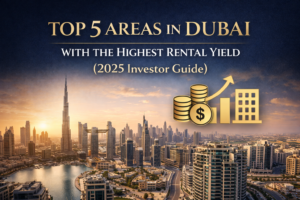
1. Downtown Dubai
A perennial favorite for luxury investors due to iconic landmarks like Burj Khalifa and Dubai Mall.
✔️ Stable long-term appreciation
✔️ Strong rental demand
✔️ High-quality tenant profile
Rental yields: ~5%–6%
2. Dubai Marina
Dubai’s most famous waterfront community remains one of the best for high rental yields and holiday home income.
✔️ Strong short-term rental potential
✔️ Excellent lifestyle amenities
✔️ Global tenant appeal
Rental yields: ~6%–7%
3. Jumeirah Village Circle (JVC)
Affordable yet fast growing — JVC is ideal for first-time investors and rental income seekers.
✔️ High occupancy rates
✔️ Steady infrastructure upgrades
✔️ ROI: ~7%–10%
4. Dubai South
Located near Al Maktoum International Airport and Expo City, this area offers long-term growth potential and affordable entry points.
5. Business Bay
A mixed-use hub that combines business, residence, and lifestyle. Continued demand from professionals makes it a high-rent growth area.
6. Dubai Creek Harbour
Sometimes called “the next Downtown,” this waterfront destination offers premium living with future upside potential.
Major Real Estate Trends in 2026
Smart & Sustainable Living
Investors increasingly favor properties that integrate smart technology and eco-friendly design — such as automated systems, sustainable materials, and energy efficiency. This isn’t just a trend — it’s a value driver for resale and rental appeal.
Luxury & Branded Residences
High-end and branded homes — developed in partnership with global luxury brands — remain highly sought after. From premium penthouses to ultra-luxury villas, this segment is less impacted by supply surges and continues to attract wealthy buyers.
Volatility & Supply Dynamics
Some global agencies warn of a moderate price correction (up to ~10-15%) in certain segments due to increased supply — especially in apartments. However, this isn’t a market crash; it’s a normal cooldown after rapid growth, and prime areas remain resilient.
Investment Opportunities & Strategies
1. Off-Plan Properties
These remain one of Dubai’s best avenues for capital appreciation — provided you select reputable developers and promising locations.
Why off-plan works:
- Lower initial prices
- Payment flexibility
- Capital growth on handover
- High investor demand
Just remember: Do your project due diligence (DD) — don’t chase hype alone.
2. Rental-Driven Investments
With Dubai’s population and tourism continuing to grow, rental demand stays strong — particularly in Marina, JBR, Downtown, and Business Bay. According to latest data, residential rents are expected to rise around 6% in 2026 as the market matures.
If cash flow is your priority, focusing on mid-range apartments and holiday home rentals can offer steady income.
Risks & Realistic Considerations
While Dubai remains attractive, investors must be aware of:
Supply Pipeline
An influx of new units can soften prices in certain districts. A balanced investment plan mitigates this risk.
Market Cycles
Dubai’s growth isn’t linear — cycles of rapid growth followed by stabilization are normal. Investors need a long-term mindset rather than timing the market
Quality Over Quantity
Projects with strong fundamentals (solid location, quality developer, real amenities) outperform superficial or oversupplied developments.
Conclusion: Is Dubai Real Estate Still Worth Investing in 2026?
Yes — with the right strategy.
Dubai’s real estate market isn’t a blind “buy at all costs” environment in 2026 — but it continues to offer multiple high-value opportunities:
✔️ Sustainable price growth
✔️ High rental yields
✔️ Strong legal framework
✔️ Global investor appeal
✔️ Flexible off-plan opportunities
If you focus on quality assets in key areas, understand market cycles, and invest long-term rather than chase quick flips, Dubai remains one of the most compelling real estate markets in the world today.
Frequently Asked Questions (FAQs)
Q1: Is 2026 a good time to buy property in Dubai or should I wait?
2026 is considered a strategic buying window rather than a speculative peak. Prices are stabilizing after strong growth, giving investors better negotiation opportunities, especially in off-plan and mid-market segments. Waiting may result in higher entry prices in prime locations.
Q2: What is the minimum budget required to invest in Dubai real estate in 2026?
Investors can enter the Dubai market with budgets starting from approximately AED 450,000–700,000 for studios or small apartments in emerging communities like JVC, Dubai South, and International City. Premium areas require higher capital but offer stronger long-term value.
Q3: Can I get residency or a Golden Visa by investing in Dubai property?
Yes. Property investors may qualify for UAE residency visas. A 10-year Golden Visa is available for property investments worth AED 2 million or more, subject to government criteria and approvals.
Q4: How liquid is the Dubai real estate market?
Dubai is one of the most liquid property markets in the region, especially in popular areas like Downtown Dubai, Dubai Marina, and Palm Jumeirah. Properties in prime locations with competitive pricing tend to resell faster than those in oversupplied areas.
Q5: Are short-term rentals still profitable in Dubai in 2026?
Yes. Short-term rentals remain profitable in tourist-driven areas such as Dubai Marina, Downtown, JBR, and Palm Jumeirah. However, investors must comply with Dubai Tourism (DTCM) licensing regulations and factor in management costs.
Q6: What are the main costs involved when buying property in Dubai?
Key costs include:
- 4% Dubai Land Department (DLD) fee
- 2% agent commission (approx.)
- Trustee registration fees
- Service charges (annual)
These costs should be included when calculating total ROI.
Q7: Which property type performs better in 2026 — apartments or villas?
Apartments generally offer higher rental yields, while villas provide stronger long-term capital appreciation. The best choice depends on your investment goal — cash flow versus asset growth.
Q8: How does Dubai real estate compare to other global property markets?
Compared to cities like London, New York, or Singapore, Dubai offers:
- Higher rental yields
- No property tax
- No capital gains tax
- Faster transaction timelines
This makes Dubai highly competitive for international investors.
Q9: What are the biggest mistakes investors should avoid in 2026?
Common mistakes include:
- Buying based on hype rather than fundamentals
- Ignoring service charges
- Overpaying during launch phases
- Choosing weak locations with excess supply
A well-researched strategy significantly reduces risk.